Coherence-Based Sound Speed Aberration Correction — With Clinical Validation in Fetal Ultrasound
Anders Emil Vrålstad, Peter Fosodeder, Karin Ulrike Deibele, Siri Ann Nyrnes, Ole-Marius Hoel Rindal, Vibeke Skoura-Torvik, Martin Mienkina and Svein-Erik Måsøy.
The preprint is published on arXiv. The full peer-reviewed paper is published in IEEE Transactions on Medical Imaging, found here. The abstract and supplementary GIF images are found below.
Abstract
The purpose of this work is to demonstrate a robust and clinically validated method for correcting sound speed aberrations in medical ultrasound. We propose a correction method that calculates the focus delays directly from the observed two-way distributed average sound speed. The method beamforms multiple coherence images and selects the sound speed that maximizes the coherence for each image pixel. The main contribution of this work is the direct estimation of aberration, without the ill-conditioned inversion of a local sound speed map, and the proposed processing of coherence images, which adapts to in vivo situations where low coherent regions and off-axis scattering represent a challenge. The method is validated in vitro and in silico showing a high correlation with the ground truth speed of sound maps. Further, the method is clinically validated by being applied to channel data recorded from 172 fetal Bmode images, and 12 case examples are presented and discussed in detail. The data is recorded with a GE HealthCare Voluson Expert 22 system with an eM6c matrix array probe. The images are evaluated by three expert clinicians, and the results show that the corrected images are preferred or gave a quality equivalent to that without correction (1540 m/s) for 72.5% of the 172 images. In addition, a sharpness metric from digital photography is used to quantify image quality improvement. The increase in sharpness and the change in average sound speed are shown to be linearly correlated with a Pearson Correlation Coefficient of 0.67.
Cite this work
A. E. Vrålstad et al., “Coherence-Based Sound Speed Aberration Correction—With Clinical Validation in Fetal Ultrasound,” in IEEE Transactions on Medical Imaging, vol. 45, no. 7, pp. 4047-4057, July 2026, doi: 10.1109/TMI.2026.3691415.
Supplementary GIF images
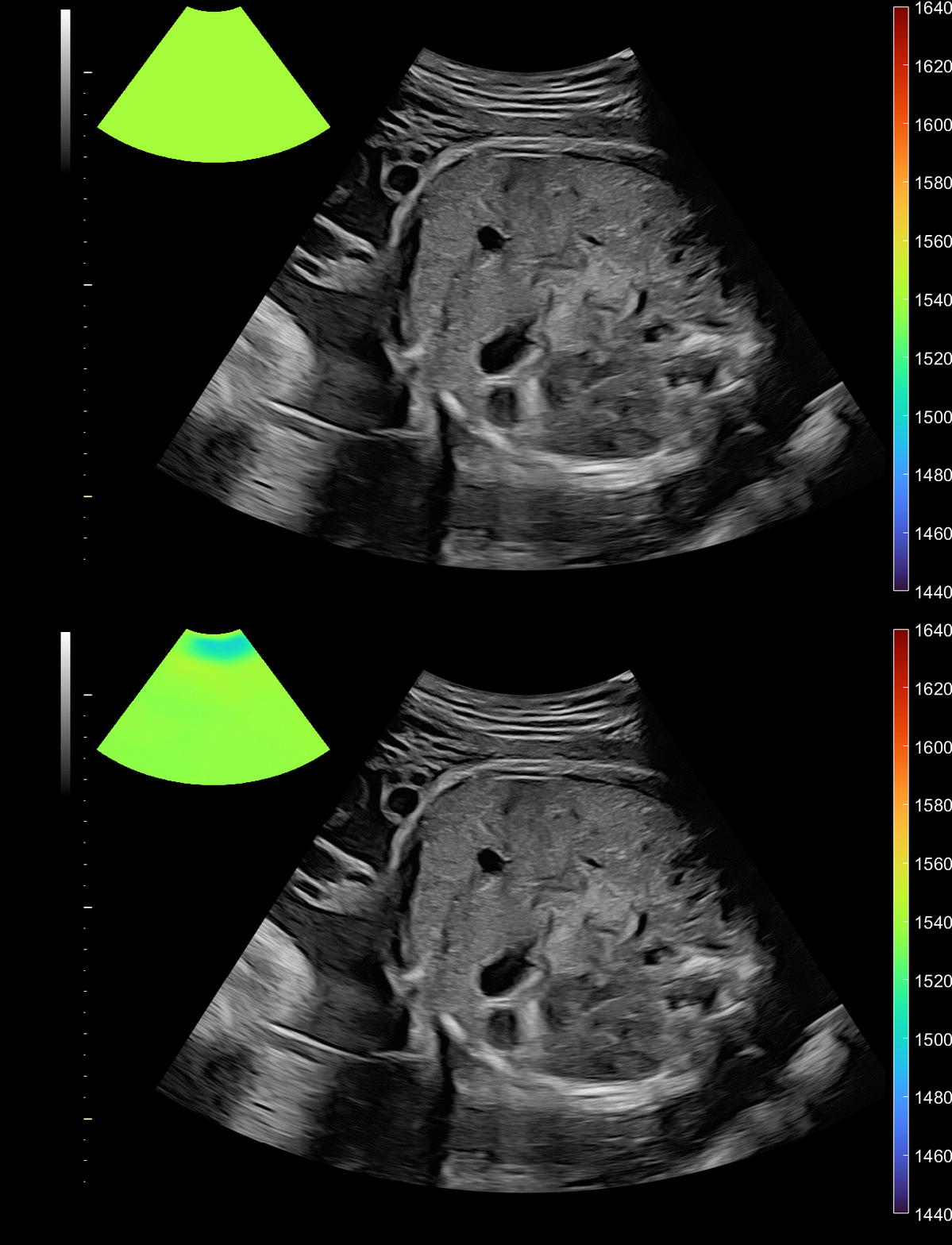
As detailed in the paper, the sound speed aberration correction is performed by estimating an average sound speed map. Twelve examples (A-L) of the 172 corrected images are shown below as alternating GIFs. The GIF images alternate between the image beamformed with a constant 1540 m/s sound speed and a sound speed corrected image using the estimated average sound speed map.
Example A
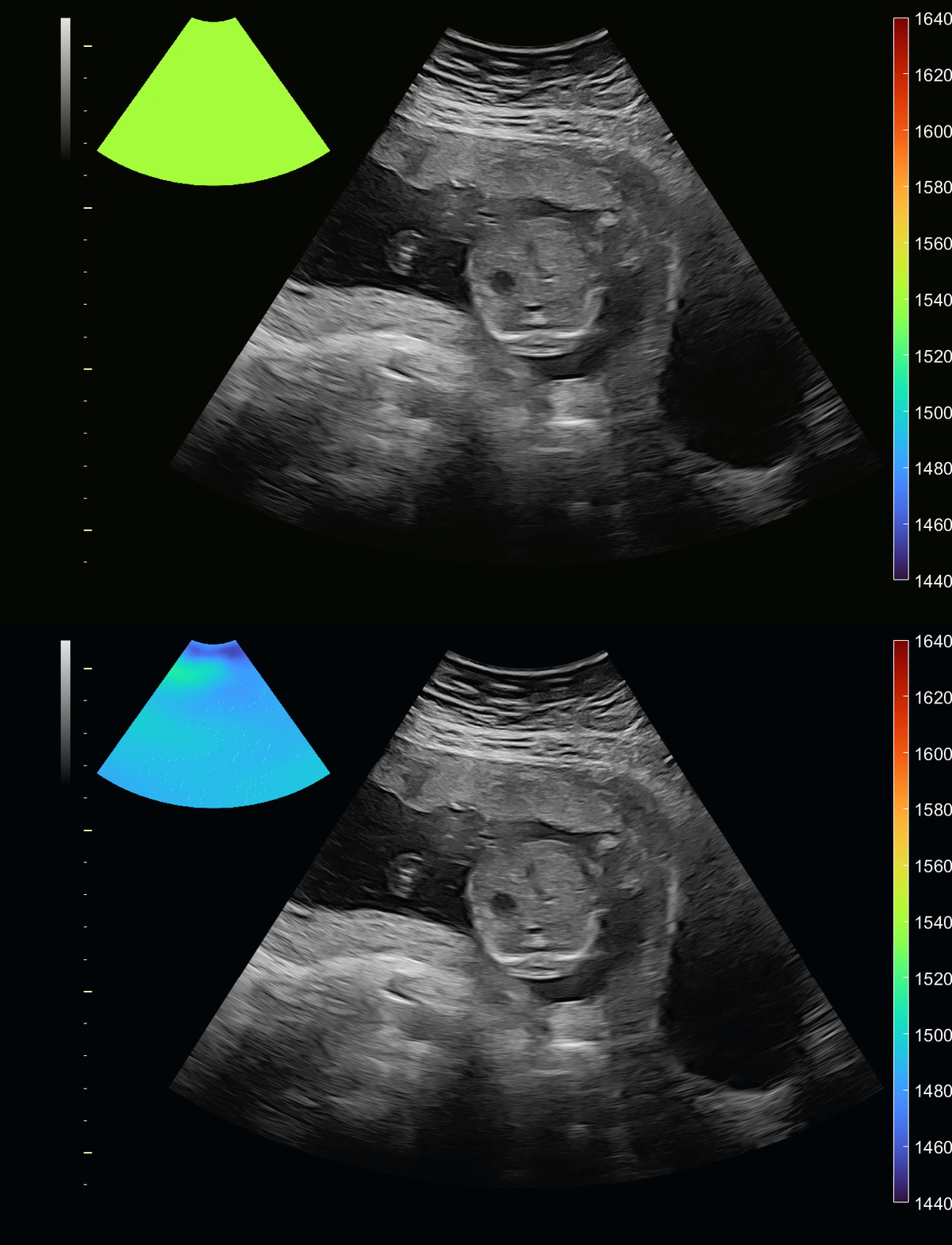
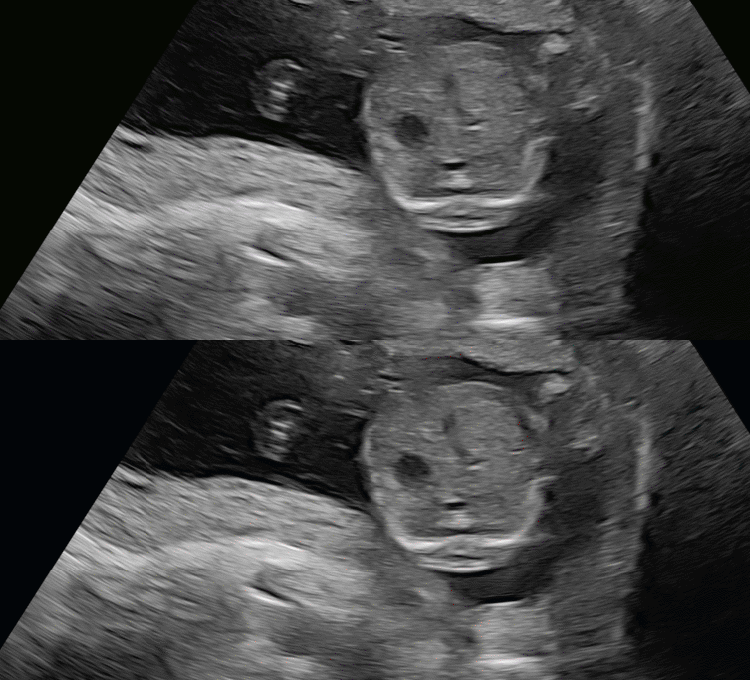
Example B
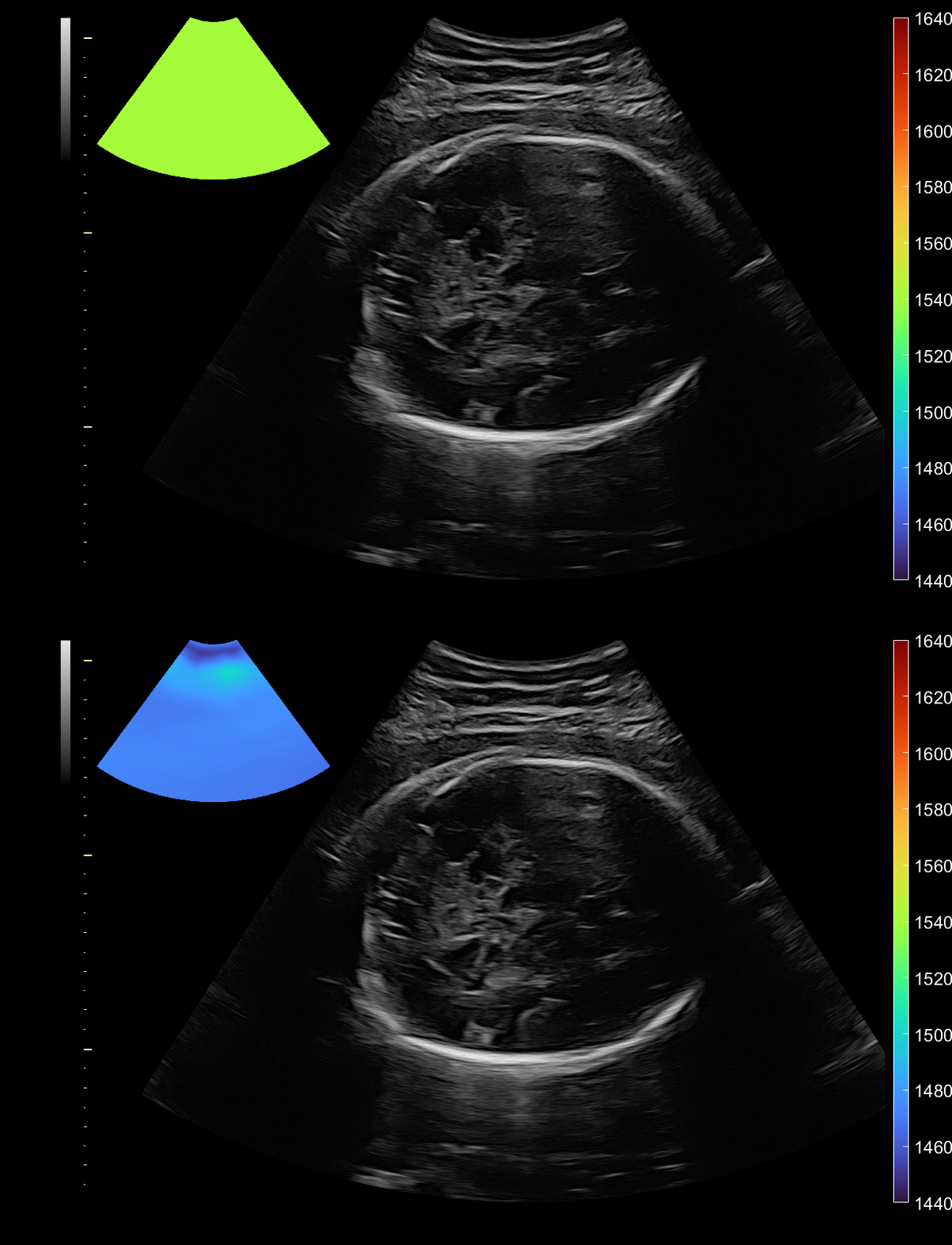
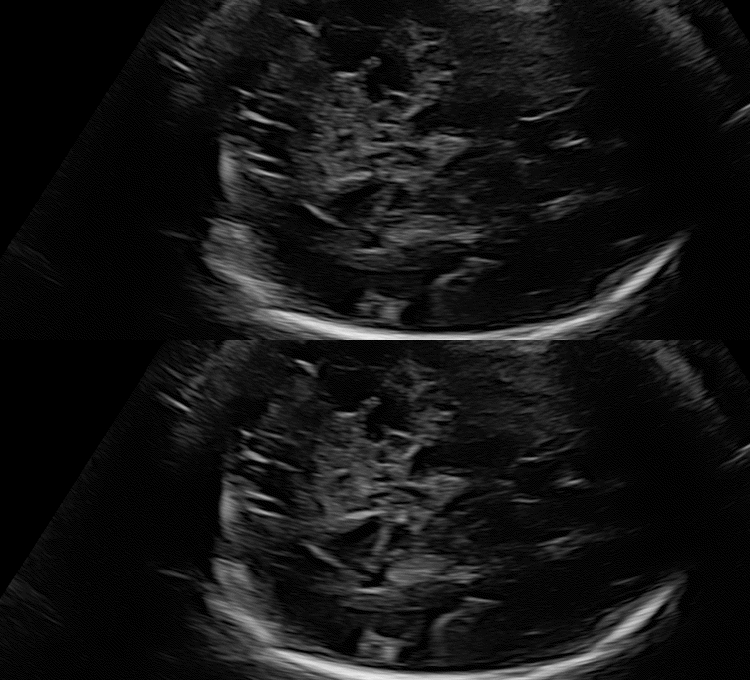
Example C
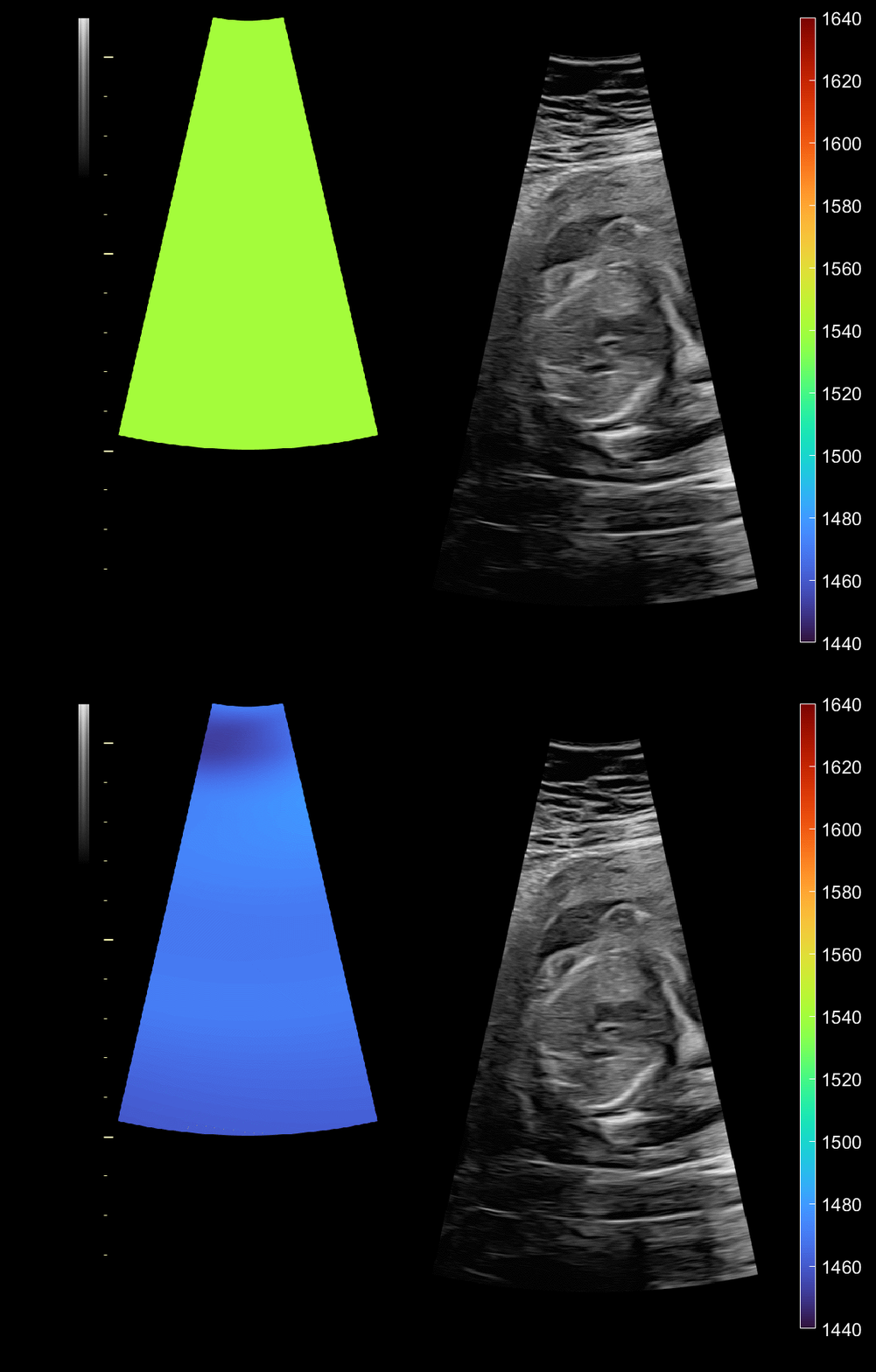
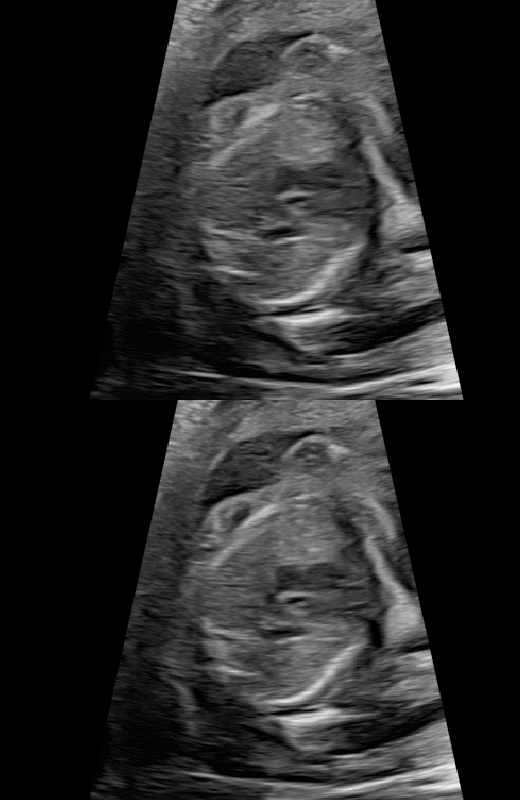
Example D
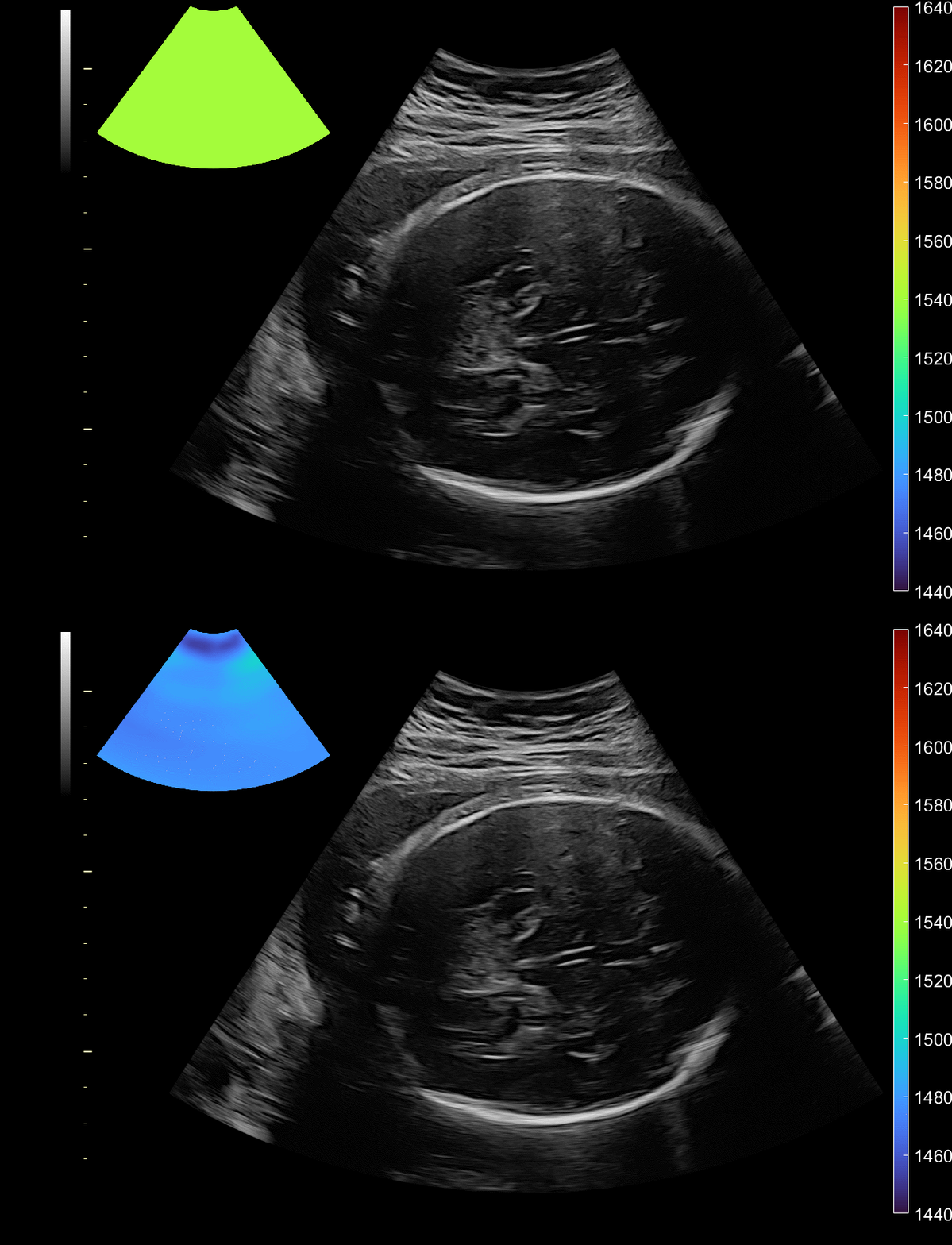
Example E
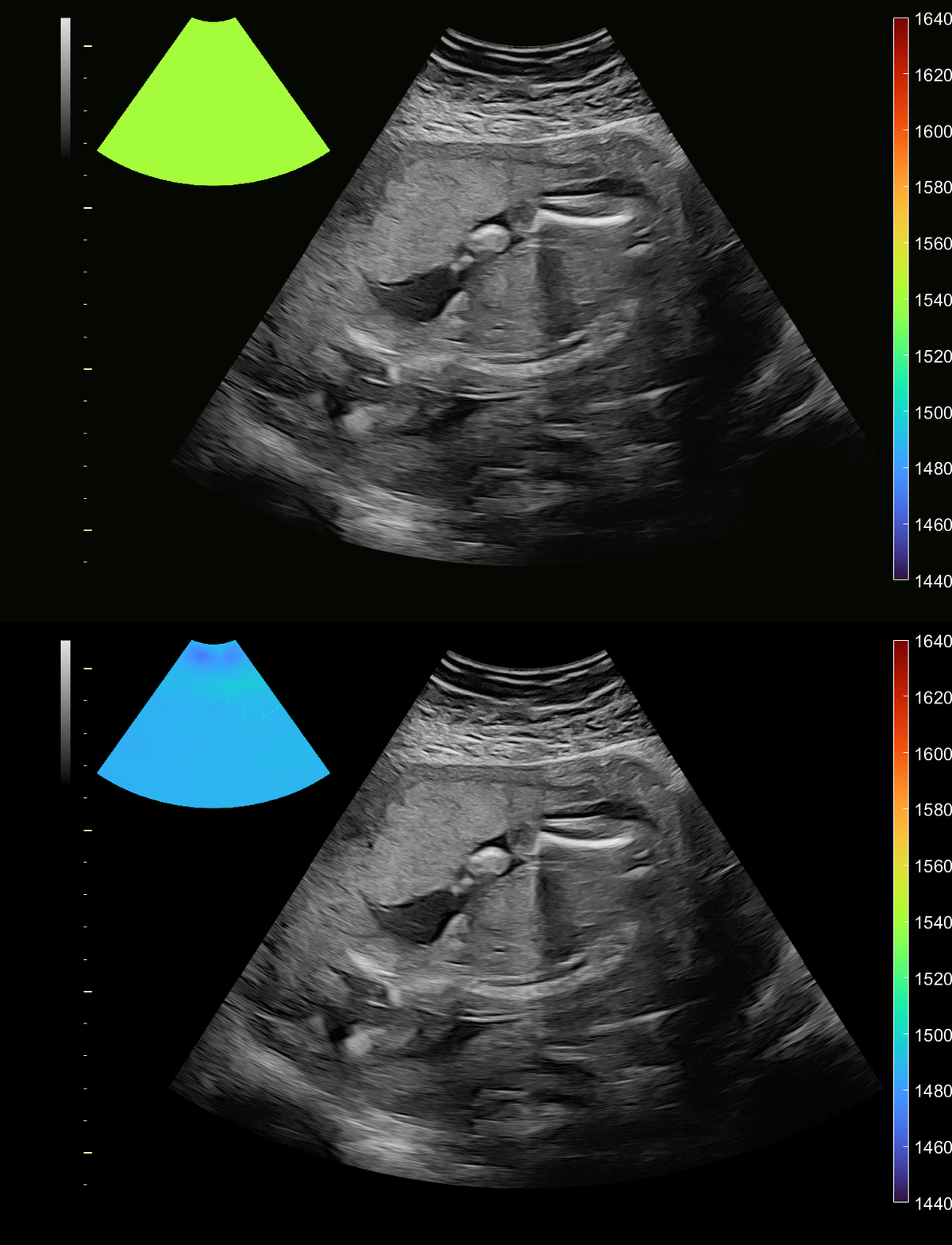
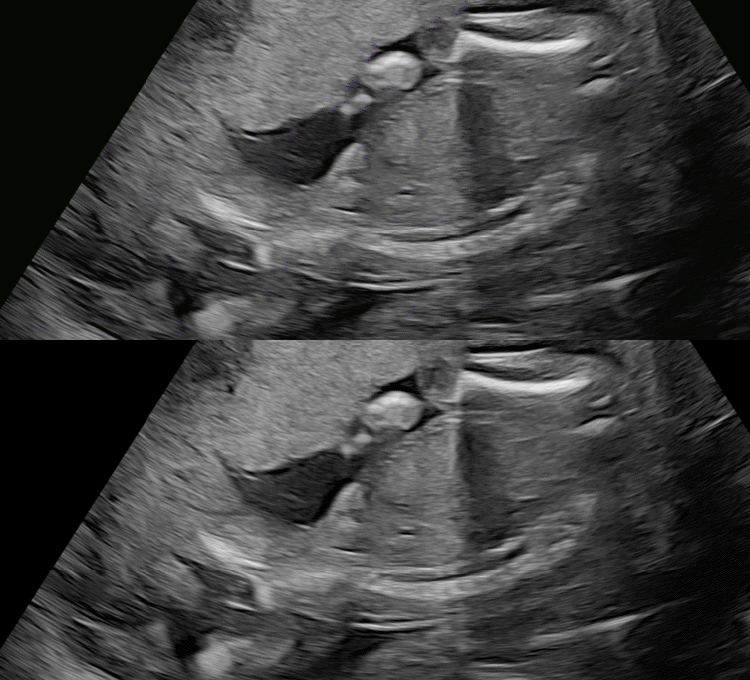
Example F
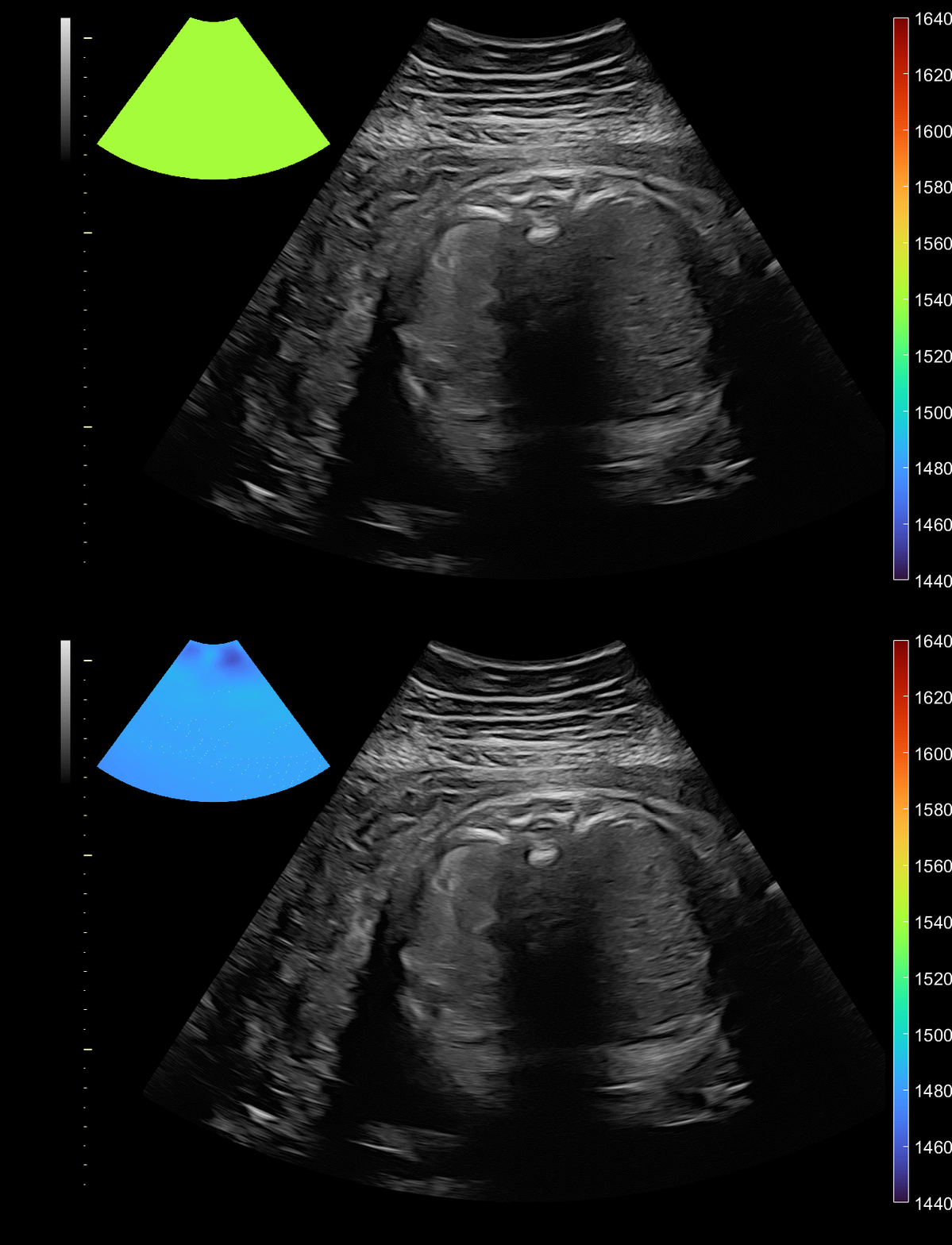
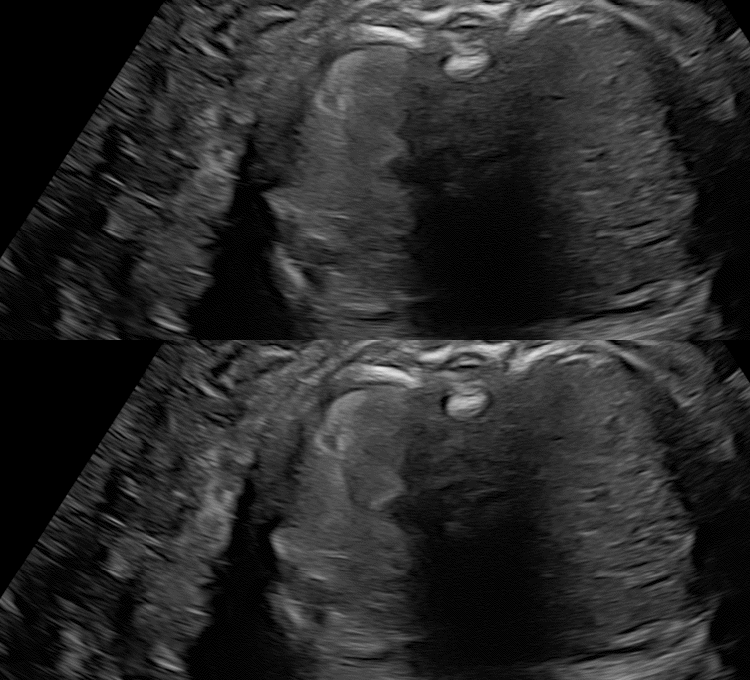
Example G
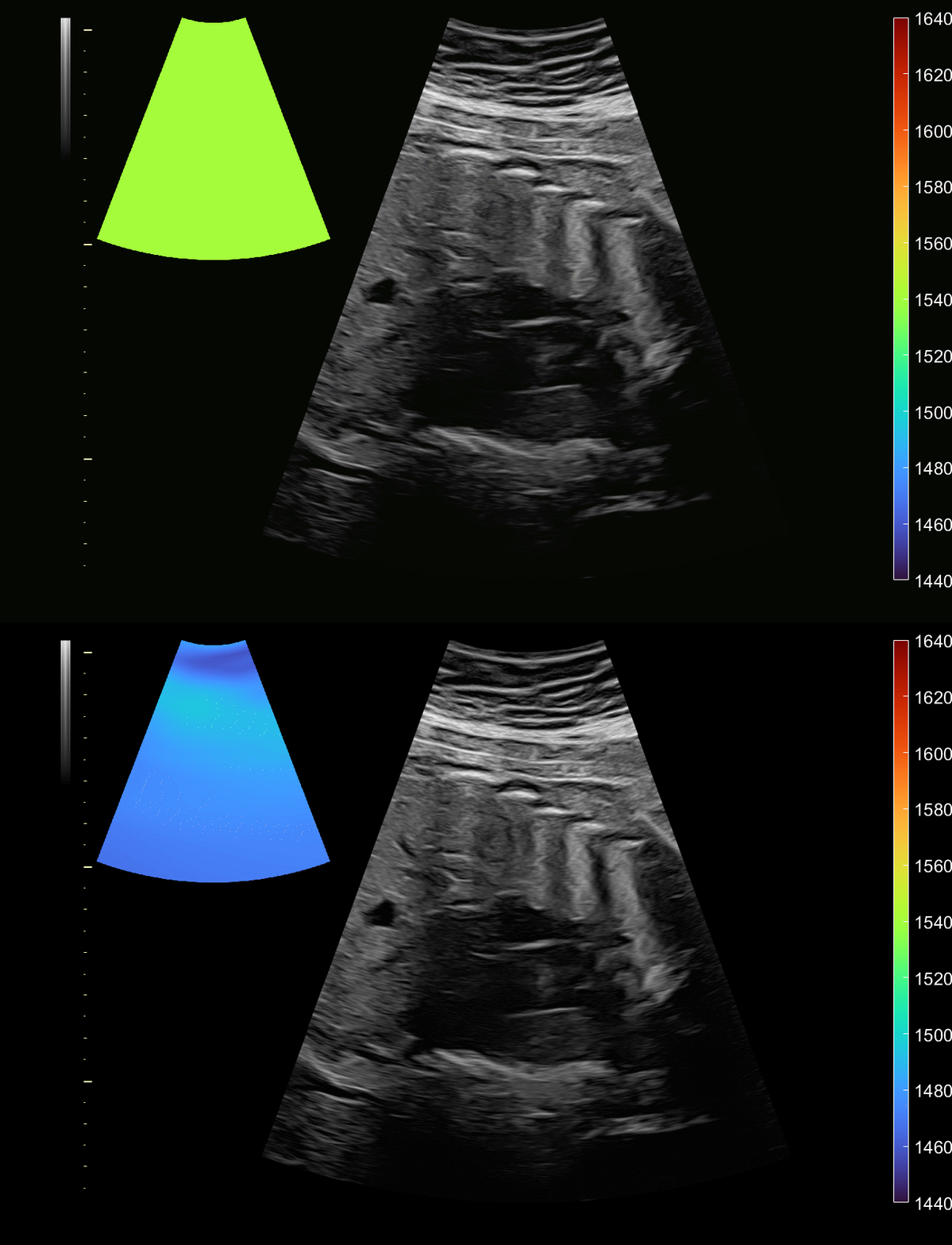
Example H
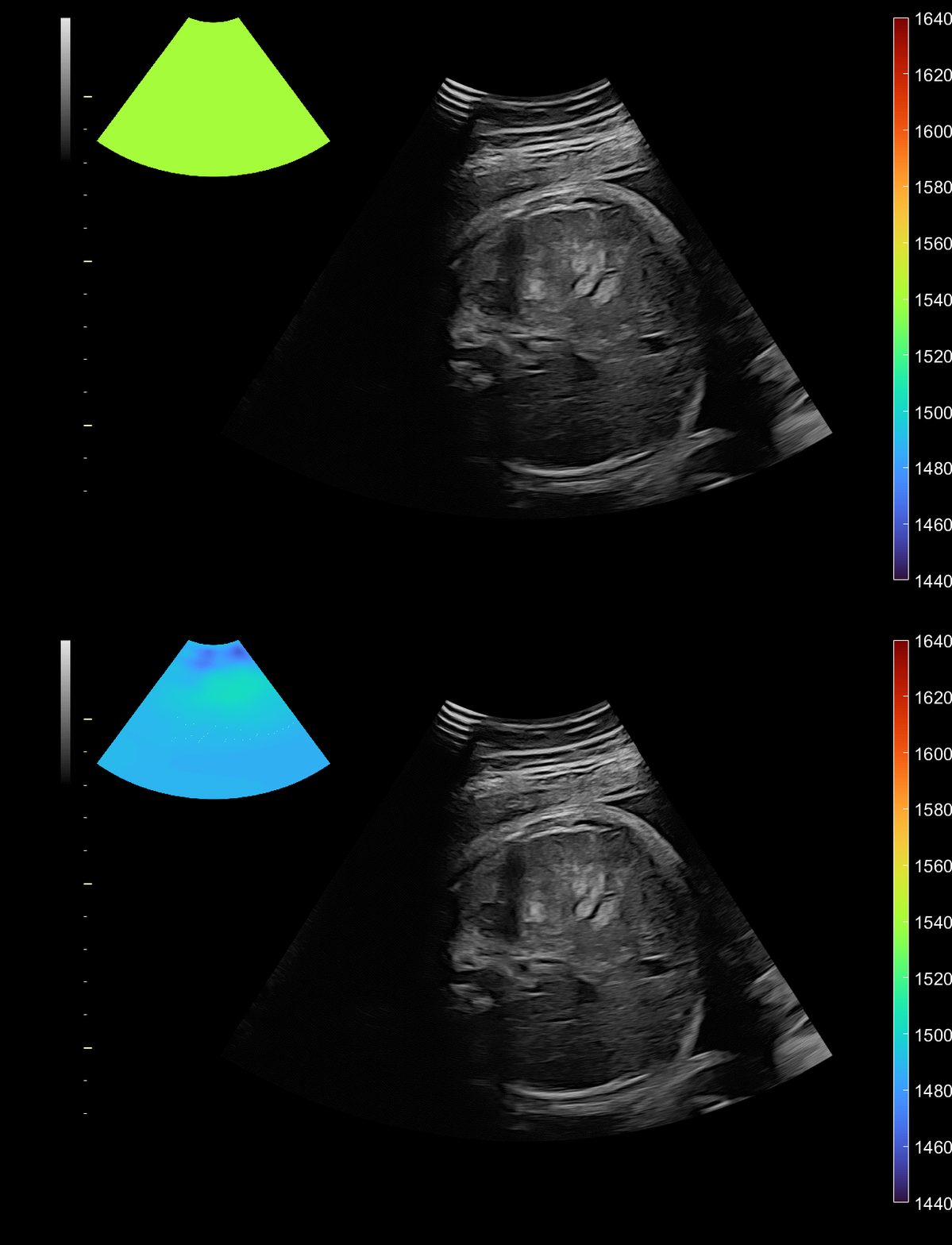
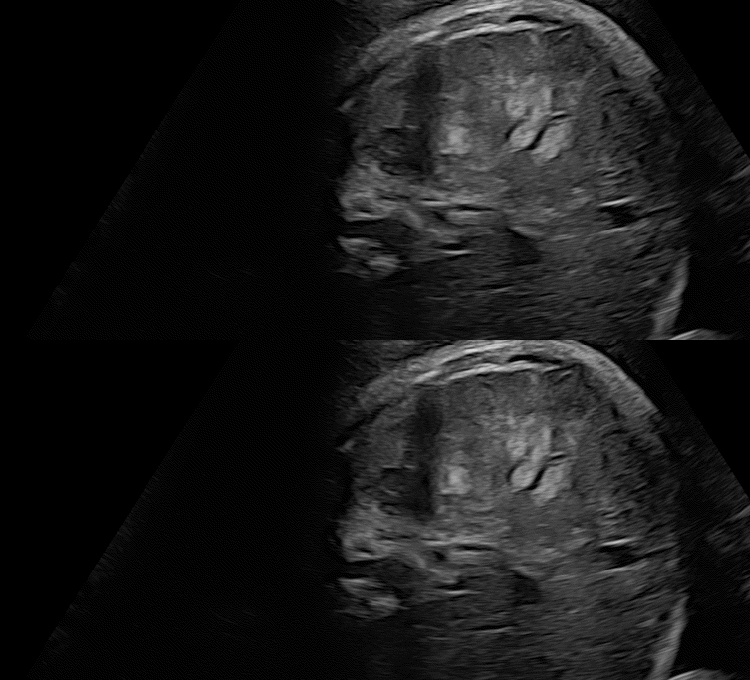
Example I
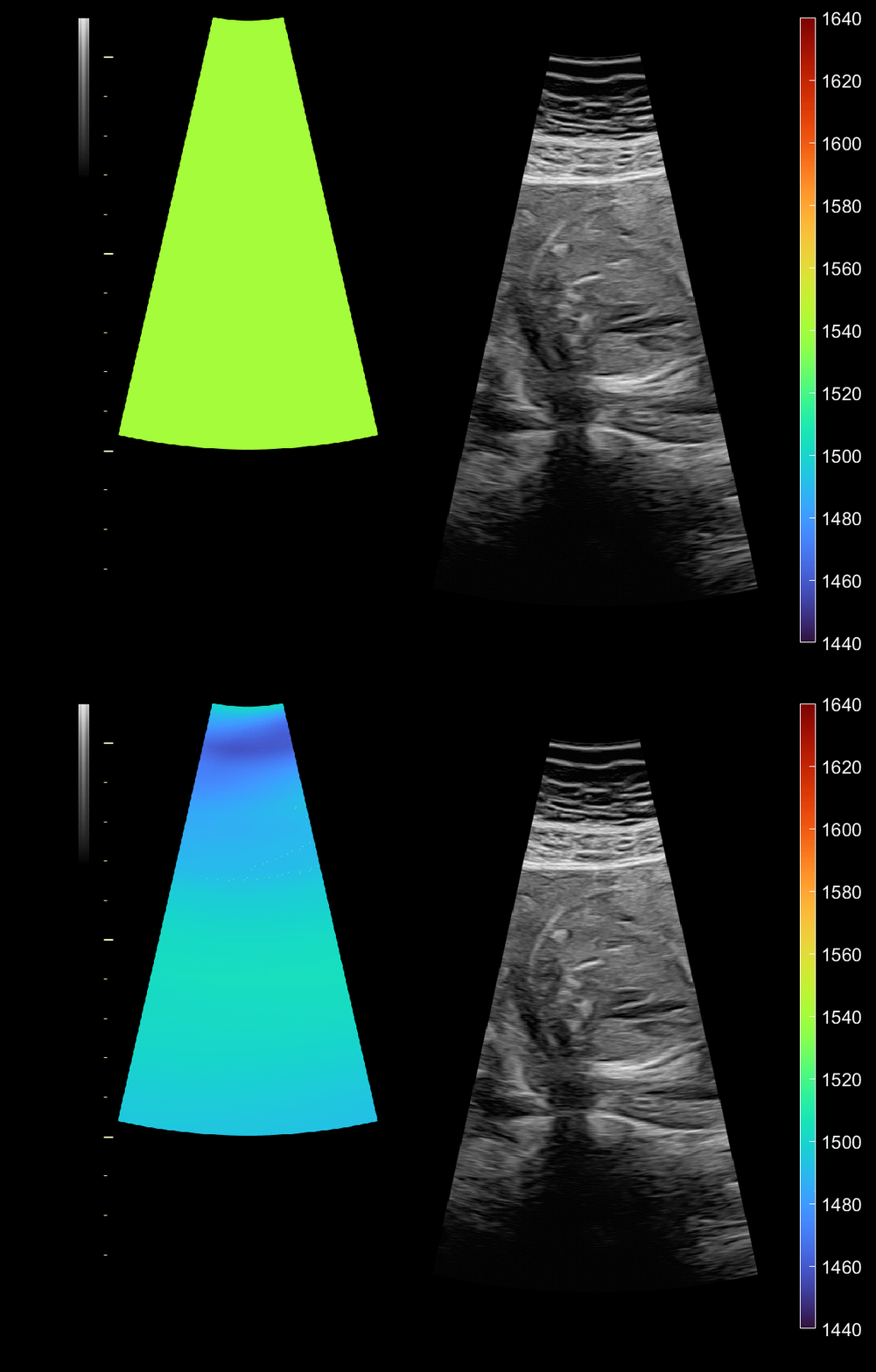
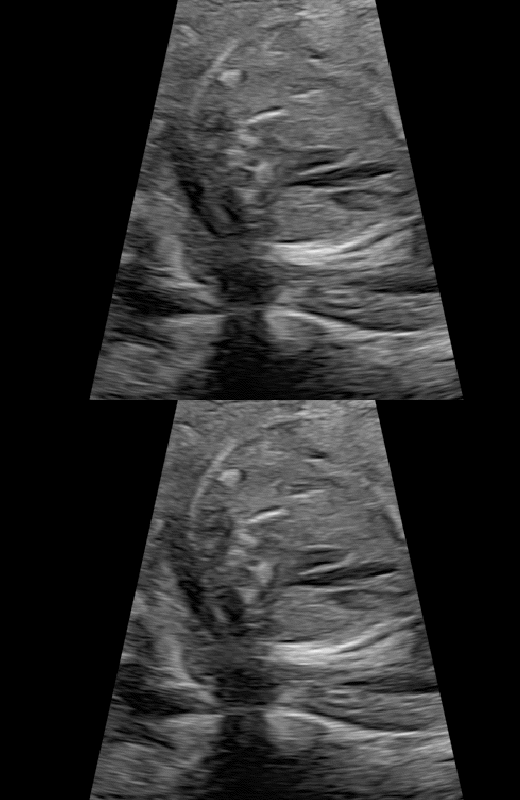
Example J
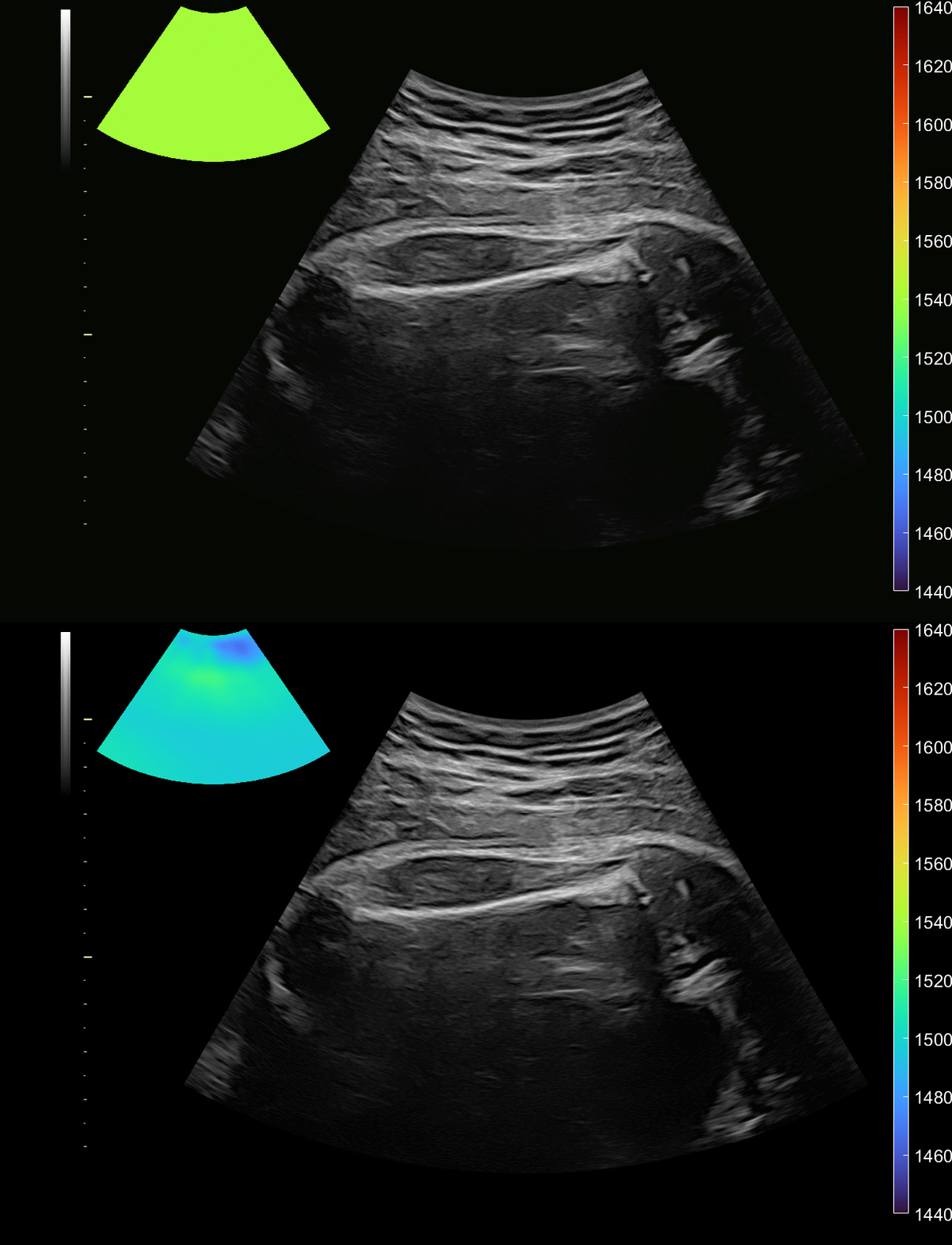
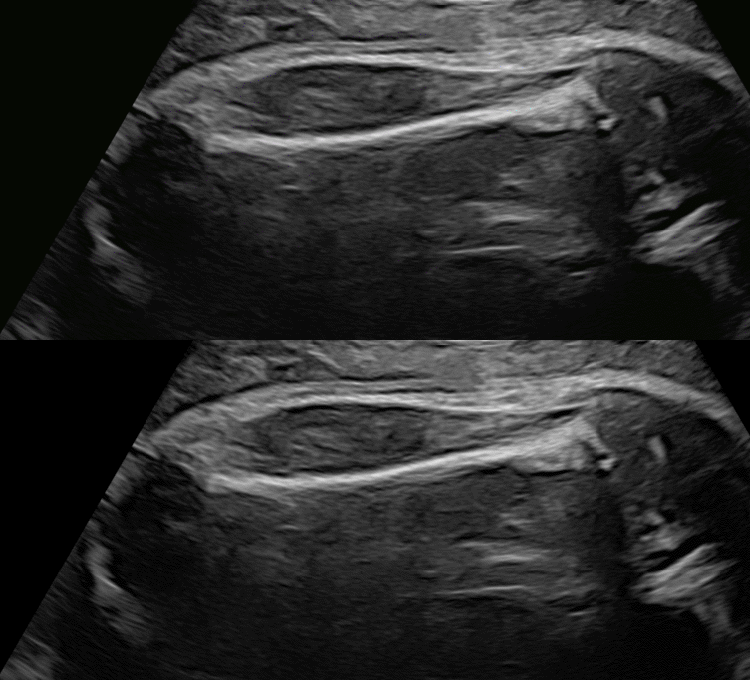
Example K
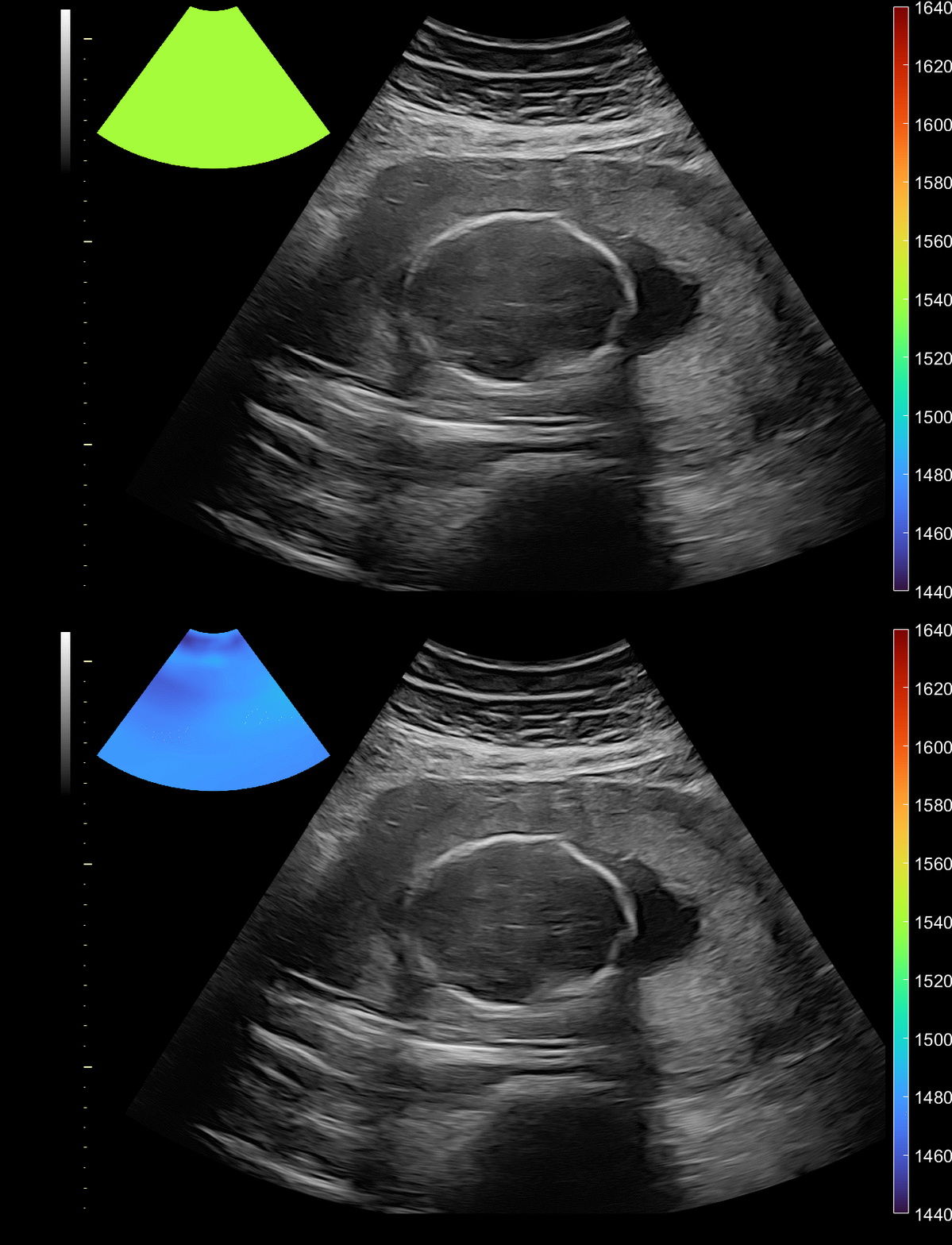
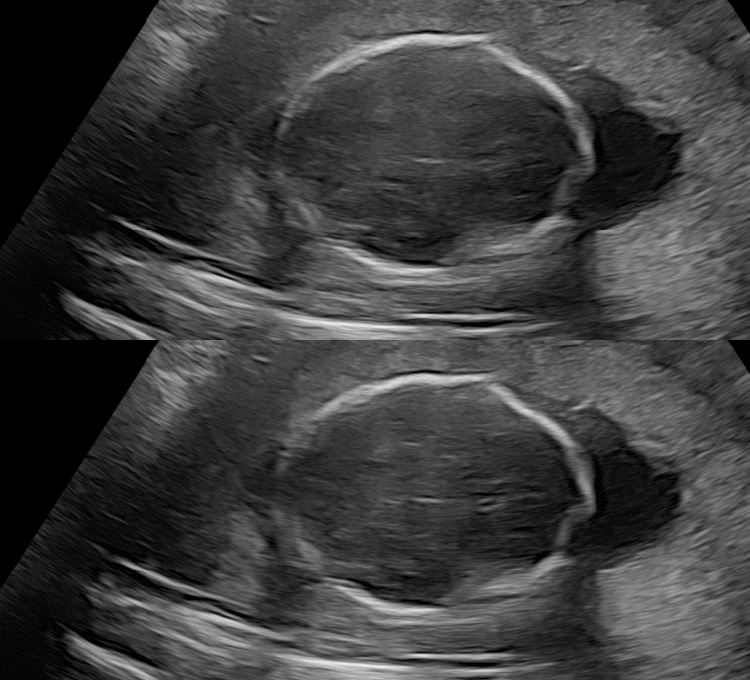
Example L